Anonymous workplace discrimination and harassment reporting platform
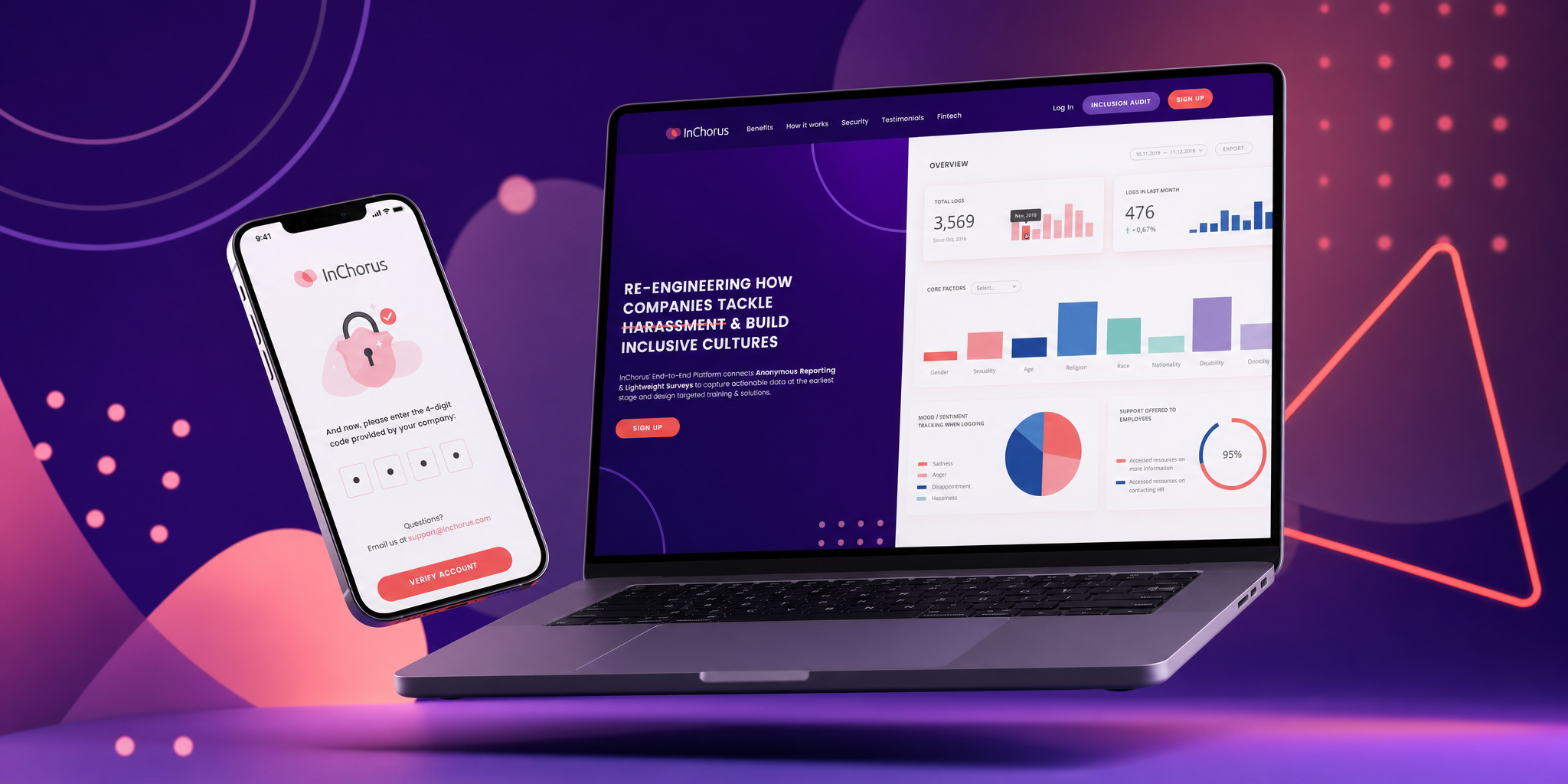
Design to break the silence.
InChorus was born to solve a problem few companies want to see: employees do not report bias or harassment incidents because they don't trust the system. The platform would only work if users felt, from the very first screen, that their anonymity was real and the process was safe.
The design challenge was twofold. For the employee: a reporting experience conveying protection without feeling cold or clinical. For the employer: an aggregated metrics dashboard enabling decision-making without ever accessing individual data. Two audiences, two flows, a single visual identity holding both without contradiction.
Roles
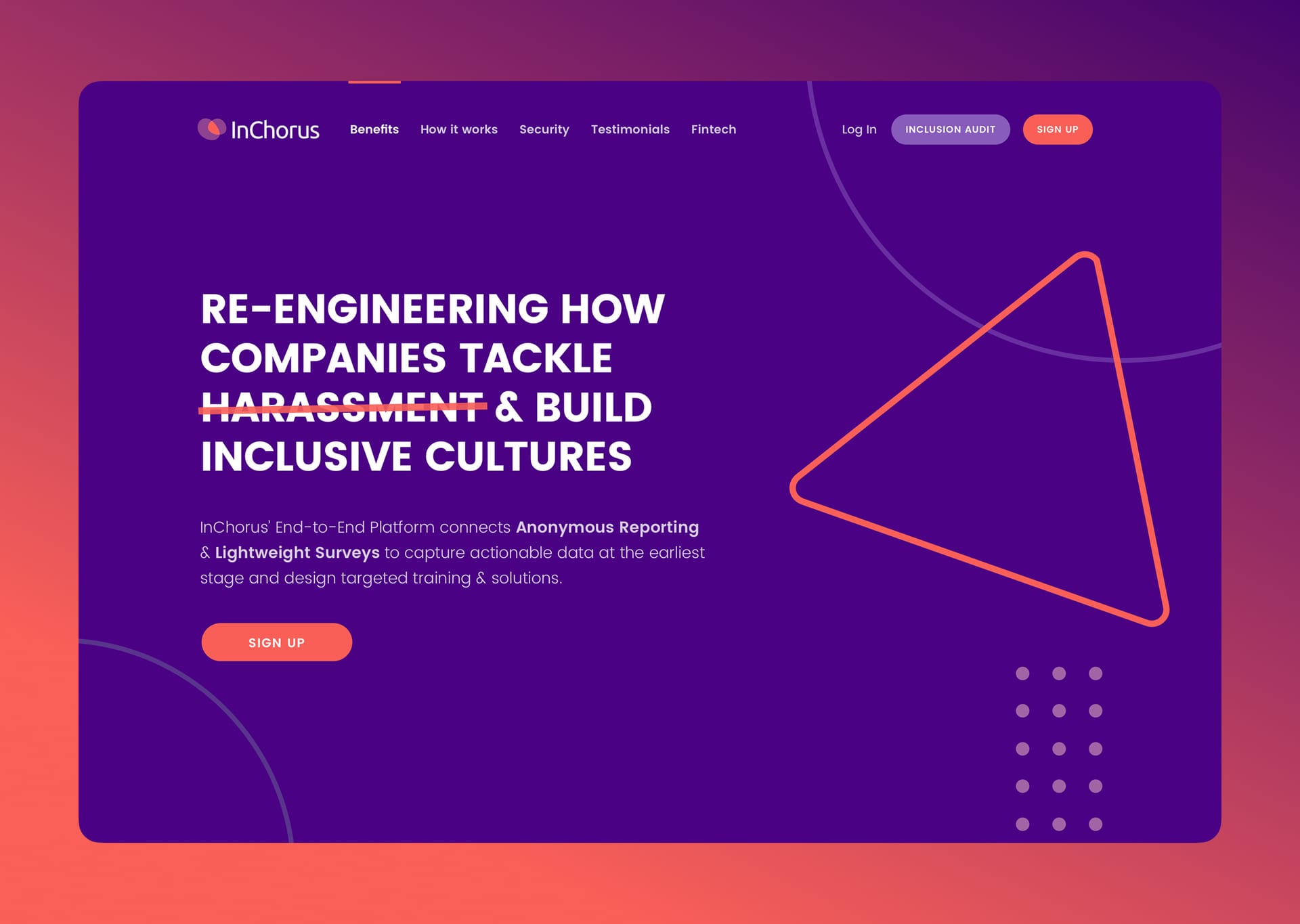
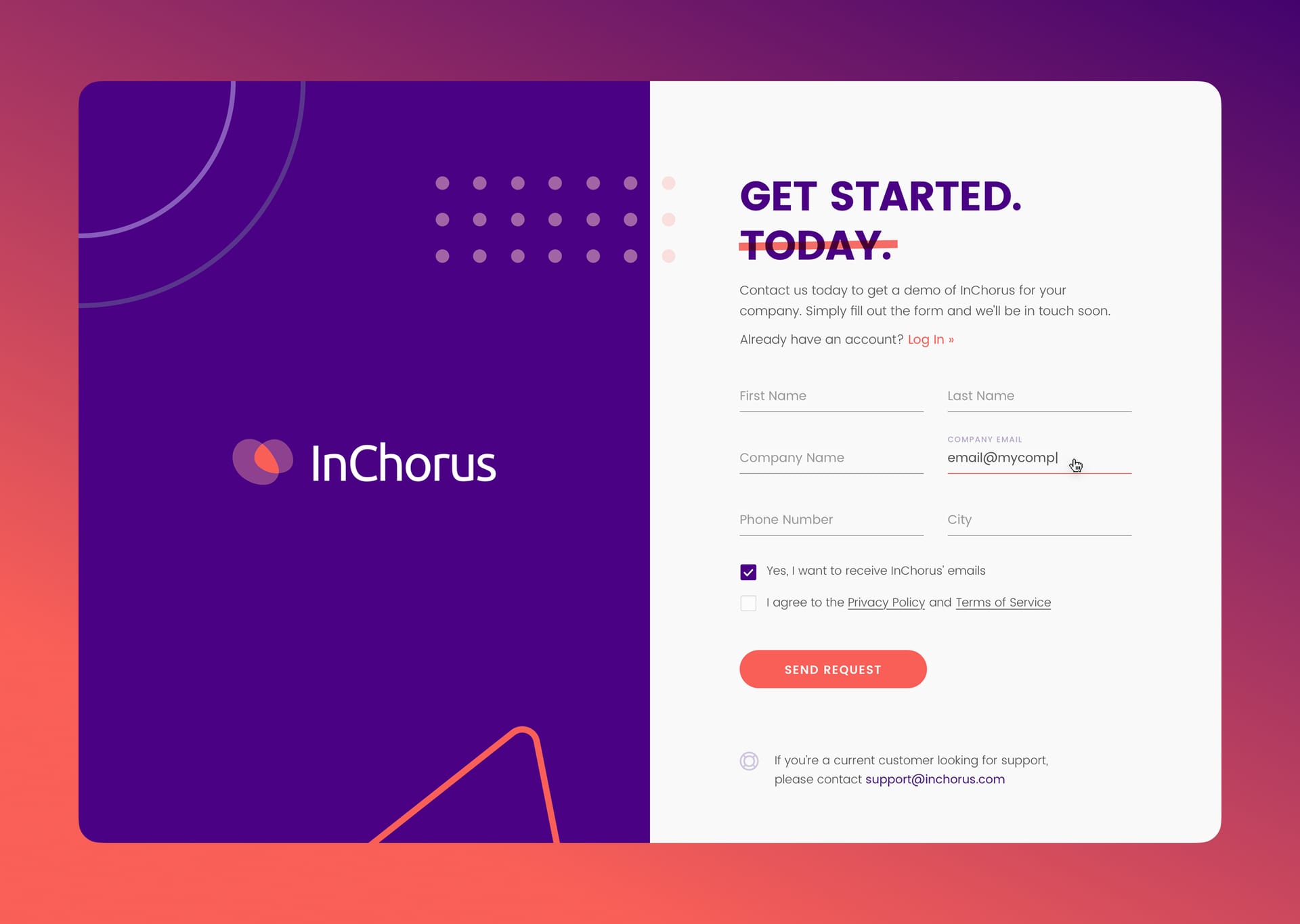
Identity was built on the concept of intersection: the point where different human groups intersect and negotiate their space and limits.
The resulting symbol uses organic, irregular shapes—intentionally imperfect—with a Pantone 2029C red as the guiding thread. Not an alert red, but a shared-life red. The dark gray anchors the contrasts without hardening the tone. Ubuntu for the brand and headlines, Open Sans for everything the user needs to read calmly.
The frontend was laid out on Bootstrap 4 with jQuery, featuring a step-by-step reporting wizard that minimizes cognitive load during stressful moments. The employer dashboard integrates Google Charts to visualize incident patterns—what type, which department, what time frame—without exposing any individual data. The security architecture accompanied every UX decision: GDPR, AES-256 encryption, two-factor authentication, and ISO 27001 as the reference framework from the very first wireframe.

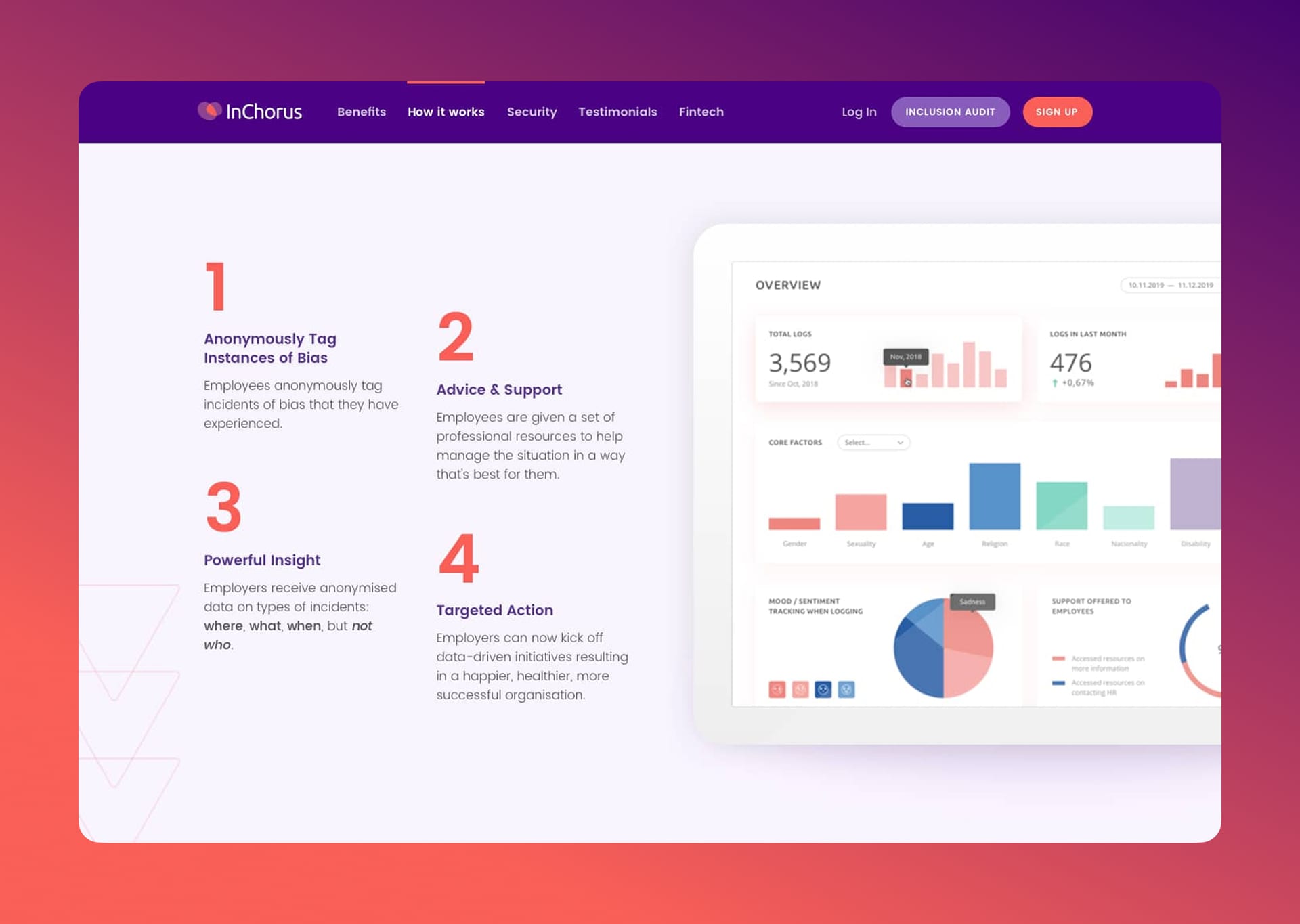
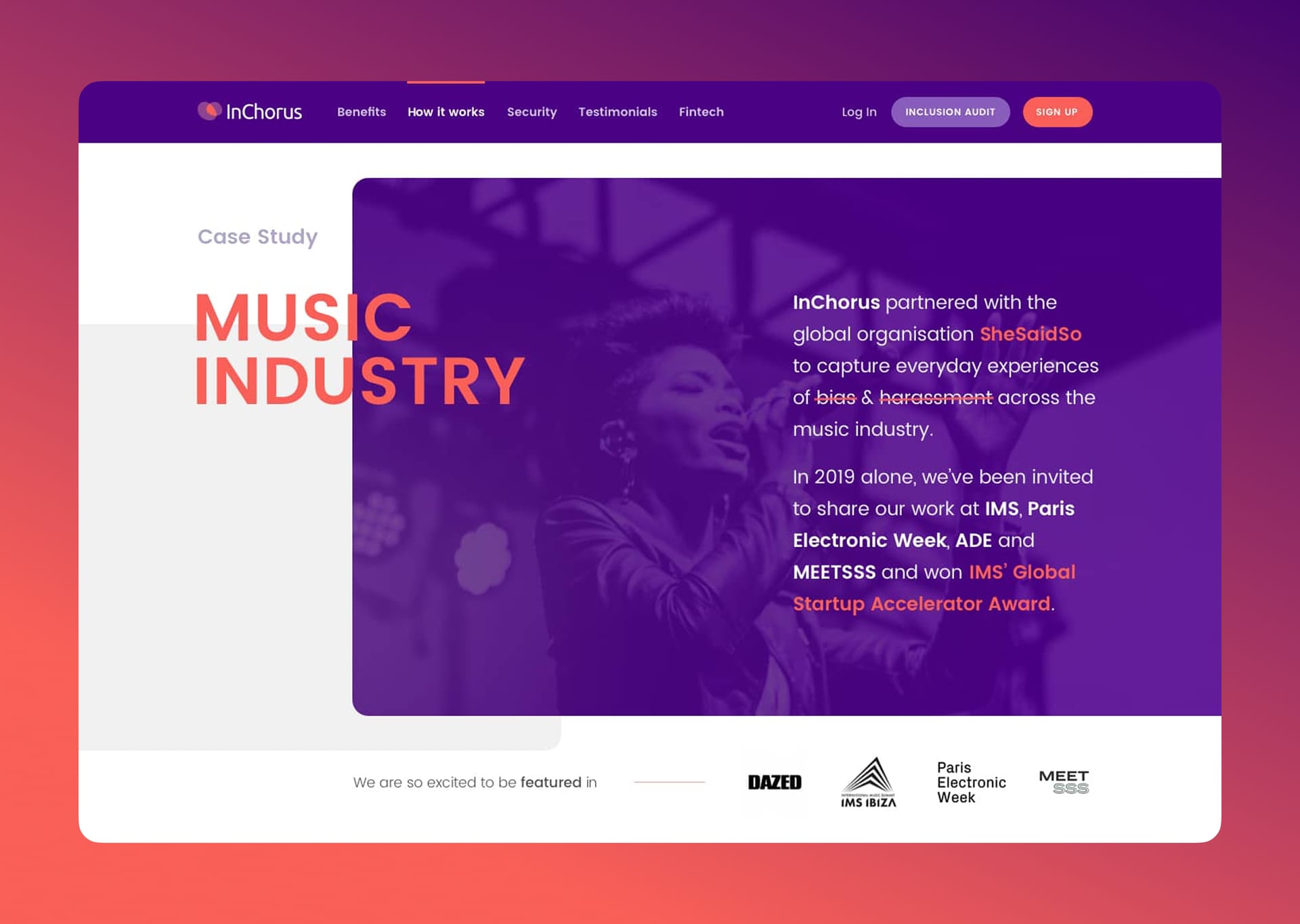
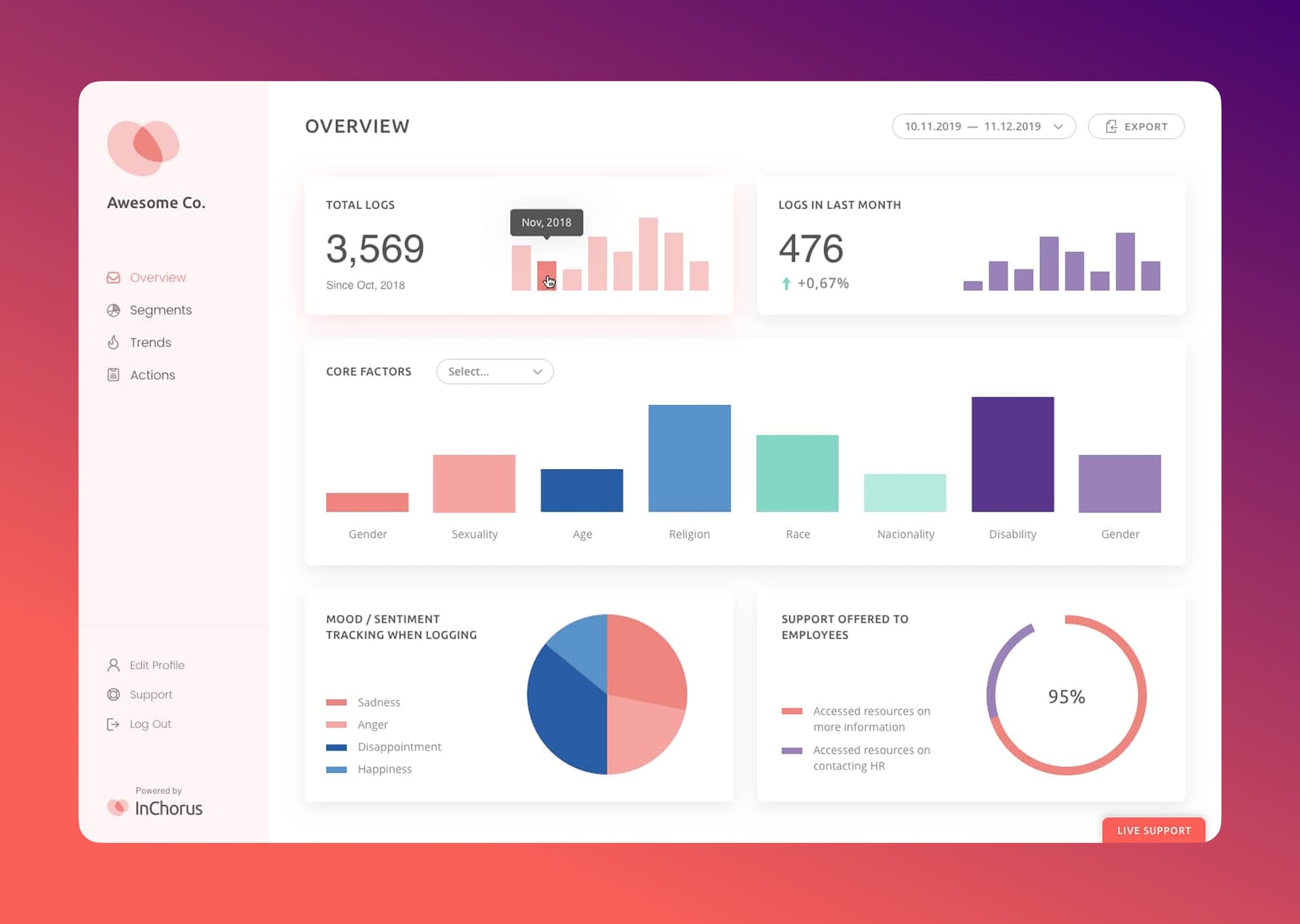
Graphic forcefulness for a social reporting platform.
A seed-stage startup dealing with such a sensitive topic needs a strong visual identity before establishing product traction. The identity and navigable prototype allowed InChorus to present itself to investors and early clients with a cohesive and professional proposal in under four months.